John Doe
We were making our way to the Rila Mountains, where we were visiting the Rila Monastery where we enjoyed scrambled.
Climate change is one of the most pressing issues of our time. This blog breaks down the science of global warming, the evidence behind it, and practical steps.
Quantum physics, often regarded as the science of the very small, has revolutionized our understanding of the universe. At its core, quantum physics explores the behaviors of particles at the atomic and subatomic levels. Unlike classical physics, where objects move predictably, quantum physics reveals a world of uncertainty, probability, and strange phenomena that challenge our traditional ideas of reality.

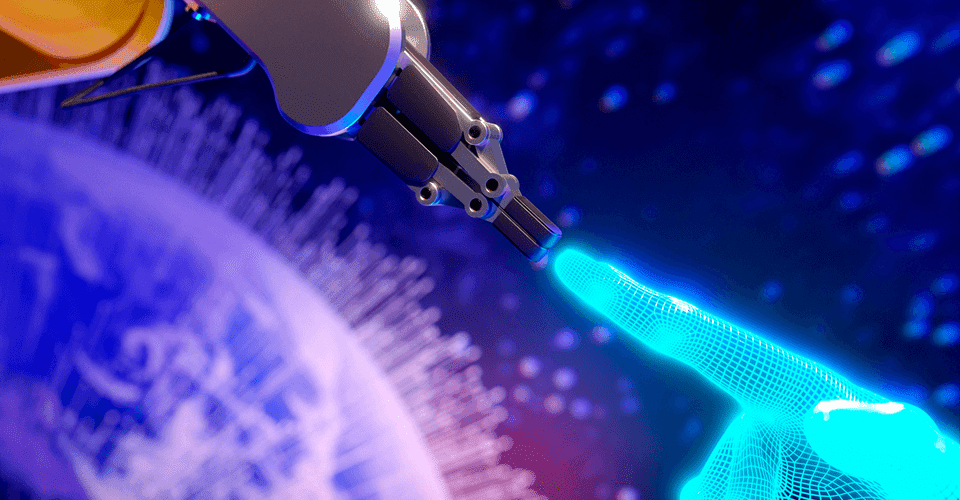
One of the fundamental principles of quantum physics is wave-particle duality, which suggests that particles, like electrons and photons, can behave both as particles and waves. This dual nature is demonstrated in famous experiments like the double-slit experiment, where light can act like a wave or a particle depending on how it’s observed. This perplexing behavior is one of the reasons quantum physics is so difficult to comprehend but also so fascinating.
“Health is not just about the food we eat; it’s about the choices we make every day to nourish our body, mind, and planet.”Cal Newport
Another key aspect of quantum physics is superposition. In this state, particles can exist in multiple positions or states simultaneously. It’s like flipping a coin and having it be both heads and tails at the same time, only to collapse into one outcome once observed. This idea has profound implications for computing, as it leads to the concept of quantum computing, where quantum bits, or qubits, can represent more information than traditional binary bits, potentially revolutionizing technology.

The concept of entanglement is perhaps one of the most mind-boggling principles of quantum physics. When particles become entangled, the state of one particle is instantly linked to the state of another, no matter how far apart they are. This means that changing one particle’s state will immediately affect the other, even if it’s on the opposite side of the universe. This phenomenon, which Einstein famously called “spooky action at a distance,” challenges our understanding of space and time.
Quantum physics also introduces the uncertainty principle, formulated by Werner Heisenberg, which asserts that we can never simultaneously know both the exact position and the exact velocity of a particle. This principle highlights the limitations of measurement and implies that the universe is inherently unpredictable at the smallest scales. It fundamentally changes how we view reality and knowledge itself, suggesting that some aspects of the universe are unknowable.


Finally, quantum physics has practical applications in modern technology, from lasers to MRI machines to the development of quantum computers. These technologies, which were once based on theoretical physics, are now integral parts of our everyday lives, demonstrating how quantum discoveries have paved the way for technological innovation.
In conclusion, quantum physics offers a glimpse into the fundamental workings of the universe, where the rules of classical physics no longer apply. While it may be difficult to wrap our minds around, its discoveries are reshaping everything from technology to our understanding of reality itself. The journey into the quantum world is just beginning, and its future potential is both thrilling and mysterious.